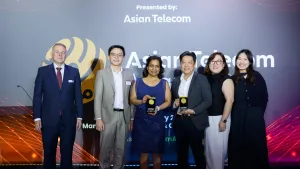

Revenue diversification, cost modernisation key to staying competitive – KPMG Singapore’s Aseem Sharma
He underscored that successful telecom leaders balance agility and transparency with strong risk management and ecosystem partnerships.
The telecom industry in the Asia Pacific is evolving quickly as operators adopt new technologies, expand into digital services, and reshape their business models. With advancements in 5G, AI, and cloud solutions, the sector is experiencing significant growth, innovation, and competition.
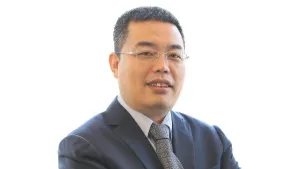
Sharing valuable insights is Aseem Sharma, Partner at KPMG Singapore and the Head of the Telecom sector for KPMG Asia Pacific. With over 20 years of experience, he has provided strategic advisory services to clients across the Telecom, Media, and Technology (TMT) sector throughout Asia, Australia, India, and the Middle East. In early 2023, Aseem transitioned from KPMG Australia to Singapore, where he now serves as the lead service partner for several major telecom companies across the region.
Renowned for his pragmatic and collaborative approach, he maintains strong relationships with boards, CEOs, CFOs, and senior stakeholders and is widely recognised for his expertise in managing complex engagements whilst driving long-term value for some of the region’s largest organisations.
As a judge at the Asian Telecom Awards 2026, Sharma discussed how operators are transitioning from telcos to techcos, investing in AI and enterprise 5G, strengthening their sustainability commitments, and building agile organisations to drive long-term value.
With your extensive experience, how would you characterise the current transformation of the telecom industry across the Asia Pacific?
The telecommunications sector across the Asia Pacific is undergoing a profound transformation, shaped by technological, economic, and societal shifts. Operators are evolving beyond their traditional role as connectivity providers to become orchestrators of digital ecosystems. According to the KPMG Global CEO Outlook, a significant majority of CEOs are prioritising AI investments and rethinking their growth strategies in response to disruption—trends that are clearly resonating within telecom boardrooms. The rollout of 5G is fuelling this evolution, the integration of artificial intelligence, and an increasing focus on sustainability.
In response to these dynamics, many operators are diversifying their revenue streams and reimagining their business models. The shift from "Telco to Techco" is evident in the adoption of cloud-native cores, virtualised networks, and platforms that extend into entertainment, cloud services, cybersecurity, and digital payments. Enterprise use cases—such as private 5G for industrial environments—are gaining traction, whilst sustainability is being embedded through energy-efficient infrastructure and green data centres.
In your view, how are telecom operators adapting their business models to stay competitive amidst digital disruption?
Operators across the region are fundamentally re-architecting their business models to unlock new growth opportunities and manage costs more effectively. As highlighted in a recent KPMG press release, 71% of CEOs surveyed are “doubling down on AI and talent despite economic challenges”—a sentiment clearly reflected in how telecom companies are reshaping their strategies.
To remain competitive, operators are focusing on two key areas: revenue diversification and cost modernisation, with AI playing a pivotal role in both. On the revenue front, offerings such as private 5G, edge computing, and managed services are gaining traction, particularly amongst manufacturers, logistics hubs, and healthcare providers. Simultaneously, fintech solutions, micro-lending, and bundled digital media services are expanding rapidly across the region.
On the cost side, operators are migrating their business and operational support systems (BSS/OSS) to the cloud, sharing infrastructure, and monetising physical assets such as towers and fibre networks. AI is being embedded across operations to enable predictive maintenance, enhance customer retention, and optimise network performance. Collectively, these shifts reflect a broader ambition to build more agile, customer-centric, and resilient organisations in the face of accelerating digital disruption.
In what ways can business transformation and innovation enable telecom companies to enhance efficiency, agility, and long-term value creation?
Business transformation and innovation are enabling telecom companies to enhance efficiency, agility, and long-term value creation by reimagining both their technology and operating models. The adoption of agile methodologies, DevOps, and continuous integration/continuous deployment (CI/CD) practices is accelerating innovation across IT and network domains. Unified data platforms and advanced analytics are improving capacity planning and service assurance. Industrial-grade solutions—such as private 5G, multi-access edge computing (MEC), and digital twins—are reducing operational costs and enhancing resilience.
These capabilities not only improve responsiveness to market demands but also lay the foundation for sustainable, long-term value creation.
What leadership capabilities do you believe are essential for guiding telecom organisations through continuous change?
The most effective leaders in the telecom sector are those who combine agility and transparency with disciplined risk management and a strong focus on ecosystem partnerships. Responsible AI governance is becoming increasingly important, particularly given the sensitive nature of customer data and the critical role of telecom infrastructure.
Successful leaders are aligning their strategies with long-term sustainability goals, promoting digital inclusion, and fostering trust amongst customers, regulators, and investors. Purpose-driven leadership and clear communication are proving essential in navigating this complex and rapidly evolving landscape. As the pace of change accelerates, cultivating these leadership capabilities across all levels of the organisation will be vital to sustaining momentum and driving innovation at scale.
Looking ahead, what key trends or developments do you believe will define the next phase of growth for Asia’s telecom sector?
Looking ahead, the next phase of growth in Asia’s telecom sector will be shaped by four key trends.
First, the monetisation of enterprise 5G will unlock new value in sectors such as manufacturing, logistics, and smart cities. Second, AI-powered operations and autonomous networks will drive efficiency and reduce the need for manual intervention. Third, sustainability will remain a strategic priority, with investments in energy-efficient RAN, renewable-powered data centres, and green financing. Finally, deeper convergence with financial and media services will create new digital ecosystems and revenue models.
Together, these trends will define the competitive landscape for years to come.
As a judge at the Asian Telecom Awards 2026, what key qualities or innovations will you value most in recognising excellence amongst the nominees?
At the 2026 awards, I will be looking for telecom operators that demonstrate innovation at scale with measurable, replicable impact. This includes enterprise 5G deployments with clear KPIs, AI solutions that are both effective and responsibly governed, and ecosystem partnerships that unlock new revenue streams.
A strong commitment to sustainability will also be a key differentiator. I will be particularly interested in initiatives supported by credible financing mechanisms—such as green bonds, sustainability-linked loans, or transparent CapEx allocations—that ensure environmental goals are not only aspirational but also financially accountable and aligned with global standards.
Equally important is cultural transformation, evidenced by agile ways of working and meaningful investment in workforce development. Ultimately, I will value transparency, impact at scale, and a clear, long-term commitment to creating value across both commercial and ESG dimensions.