
Roland Berger’s Mohit Gidwani advocates for enhanced customer propositions, seamless digital engagement
He noted that brand value and trust have now become critical as most customer interactions shift online.
As the telecom industry in the Asia Pacific continues its transformation driven by expansive 5G deployment, digital infrastructure investment, and AI-enabled services, insightful leadership and deep regional expertise are essential to navigate such a dynamic sector. Mohit Gidwani, Partner at Roland Berger’s Singapore office in the Telecoms, Media, and Technology practice, brings precisely that.
With extensive experience advising telecom and media players across Southeast Asia and the Indian subcontinent, Gidwani has guided operators through strategic and long-term transformations. He has also advised investors and development banks on digital infrastructure growth across Asia, combining hands-on implementation expertise with high-level strategic insight.
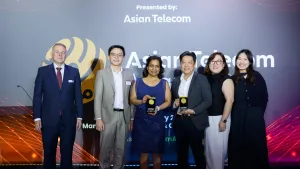
His focus lies primarily in marketing, product definition, distribution strategy, branding, e-commerce and mobile payments, organisation evolution and due diligence support. As one of the highly regarded judges for the Asian Telecom Awards 2026, he shares insights on how telecom operators can capitalise on industry opportunities whilst also emphasising the importance of digital engagement through hyper-personalisation and seamless experiences.
Reshaping market strategies
Looking into the telecom industry today, Gidwani mentioned that operators have three key opportunities that they can maximise. Firstly, they can adopt a “lean telco” model by leveraging artificial intelligence (AI), automation, and process redesign across all functions to operate more efficiently.
He added that there is a push towards delayering of infrastructure and services. Operators can reassess what they truly need to own against what can be modularised, shared, or outsourced to enable a leaner, more flexible operating model and much faster innovation cycles, as well as capital unlocking and efficiency.
Aside from the delayering, market players fight to stay competitive in the market by focusing on internal transformation, AI-driven optimisation, and maturing their core business propositions. AI and automation are being applied across workforce productivity, network operations, and customer service to reduce costs and unlock higher revenue and margins at the same time.
Lastly, Gidwani said that they can enhance their offerings and customer propositions by developing premium, differentiated products and services for both B2C and B2B, including bundled services, digital lifestyle products, 5G enterprise solutions, and network slicing, to meet evolving customer expectations.
Currently, operators are improving their core offerings through accelerated FTTH deployment, expanding FMC bundles, and encouraging prepaid-to-postpaid migration to boost customer value and retention. They are also adopting more regionalised, analytics-driven go-to-market strategies and implementing value-based network deployments with shared and efficient infrastructure, driving immediate gains in market share and ARPU.
Building deeper engagement
As customer expectations for digital experiences rise, telecom operators should prioritise building a seamless, end-to-end digital engagement. With most customer touchpoints becoming digital, brand value and trust are increasingly critical, especially when network differentiation is minimal.
“When customers primarily interact with a telco through apps and digital channels, the brand experience has to do the heavy lifting. In fact, almost all telcos of today and yesterday have an app, whilst a telco of tomorrow is the app,” Gidwani said.
Operators should focus on creating a “superapp” that integrates a vast, yet curated ecosystem of partner offerings across content, commerce, mobility, financial services, and lifestyle, tailored to individual user behaviours.
This ecosystem should be supported by advanced analytics and next-generation CVM/data systems to enable hyper-personalisation, selecting specific propositions for each user from hundreds or thousands of available offers, whilst feeding back into the telco’s strategy for continuous evolution. This must enable the complementing of digital engagement with seamless online-to-offline experiences.
Gidwani emphasised that these shifts towards delayering and capital efficiency and infrastructure carve-outs are some phenomena that are set to drive the industry’s evolution in the near future.
With these industry insights in mind, Gidwani would prioritise nominees in the Asian Telecom Awards 2026 that demonstrate measurable business and shareholder impact, delivering clear, quantifiable results such as improved profitability, stronger cash flow, better cost structures, or a transformative revenue mix.
Equally important for him are customer value and market outcomes, reflected in tangible improvements in customer experience, higher NPS, reduced churn, stronger digital engagement, or market share growth. Finally, nominees must exhibit scalable innovation and execution capability, either through proven success or the potential to scale pilot projects effectively.