Tune Talk evolves from MVNO to MNO in cloud-first transformation
The company can now launch new plans or respond to market shifts within 48 hours.
Tune Talk has orchestrated a strategic evolution from a Mobile Virtual Network Operator (MVNO) to a full-fledged Mobile Network Operator (MNO), providing a blueprint for agile telecommunications.
This shift is a total overhaul of the traditional telco stack in favour of a cloud-first, hyperscaler-led strategy that prioritises speed and control over physical hardware.
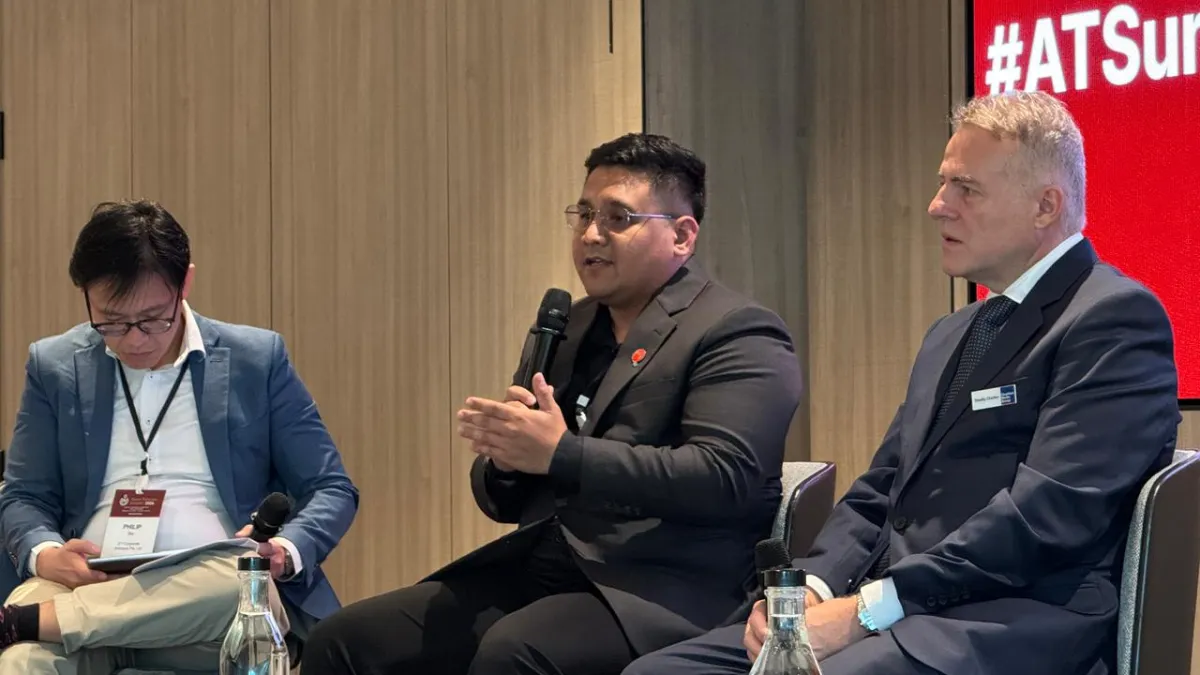
Tune Talk’s head of product, loyalty, and insights Nafis Nazri said during the 2026 Asian Telecom Summit in Singapore: "In 2024, we're full-on cloud with a hyperscaler. Everything, we move to the cloud... it gives us speed to market. It's much faster. Secondly is everything is within our control."
This independence allows the company to own its PLMN and routing network, as well as its HLR/HSS and 4G and 5G provisioning, while still attaching to parts of the Celcom Digi network and Digital Nasional Berhad’s infrastructure. Nazri said this enables Tune Talk to "respond within 48 hours... if a new competitor comes in, or a new plan really hits the market."
The transition to MNO status was anchored by a strategic partnership with Nokia as its core network provider, but operational efficiency is driven by AI integration within their hyperscaler environment. Rather than relying on manual intervention, Tune Talk said it uses automation to handle network volatility.
"We use AI with our hyperscaler. What it does is it auto-scales," Nazri said. "If the network becomes a bit too congested, it automatically distributes the bandwidth across, so that the network doesn't become overloaded."
This technical maturity allows a smaller team to manage complex infrastructure that previously required massive human capital.
Beyond hardware, Tune Talk is leveraging its MNO status to redefine the "identity layer" of telecommunications. In a move that differentiates the company from incumbents, it has integrated with the national My Digital ID program for KYC and SIM registration.
Nazri said that traditional MFA-based security measures were often "too cumbersome for the user's digital experience," especially for less digitally literate users in rural areas. Integration with the national registry ensures all users are authenticated against a single verified database.
He added that Tune Talk also implemented full Truecaller integration so users can easily confirm legitimate Tune Talk customer care numbers and avoid social engineering scams — an acute issue among rural subscribers who still rely on USSD and scratch cards.
Nazri also said that Tune Talk is shifting its commercial focus toward the postpaid segment, with plans to “whack the postpaid market very, very soon,” even as it continues to play strongly in the prepaid space.
Beyond new service tiers, the company intends to position its platform as an "everyday app that everyone uses" to improve daily life through a broader ecosystem of value rather than just connectivity.
Nazri clarified that the strategy is not to build a traditional "super app" or mirror the "mini-program style" seen in Chinese applications, but rather to foster long-term retention by being present for users during significant life milestones. He concluded that providing consistent value across different stages of a user’s life "has always been in our DNA."