
Telkomsel deploys multi-hybrid cloud to shield enterprise AI
It chooses to own specific resources to reduce latency and improve performance.
Indonesian telecom operator PT Telekomunikasi Selular (Telkomsel) is developing a multi-hybrid cloud model as part of its artificial intelligence (AI) strategy, aiming to boost enterprise AI growth as its consumer business faces pressure.
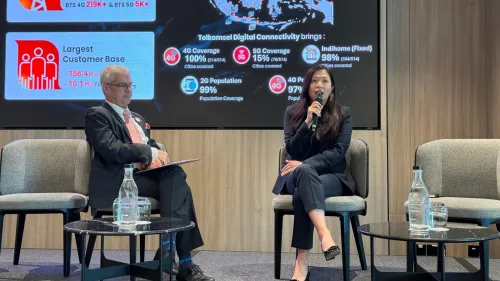
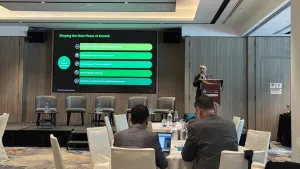
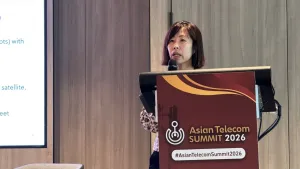
“We use a combination of resources that we deliberately choose to own ourselves to reduce latency and improve overall performance,” Telkomsel Chief Information Officer Joyce Shia told panel moderator Simon Hyett in a fireside chat at the 2026 Asian Telecom Summit in Singapore.
The group is partnering with selected hyperscalers to support rapid scaling. “The AI infrastructure is essentially a hybrid, depending on the initiative and use case we are pursuing.”
Shia added that the company aims to remain cost-effective and impactful as it tests different systems.
The infrastructure build comes as the group looks at how AI can help grow its enterprise revenue, which remains small compared to its consumer business.
“For Telkomsel, enterprise revenue today—without AI—makes up only a small part of total revenue, as the company primarily focuses on business-to-consumer (B2C),” Shia added.
“Whilst we do offer mobile connectivity, IoT, some SME lines, and data and digital solutions, enterprise revenue remains limited,” she said. “The same applies to AI revenue. We see it as a growth engine, but it is not yet substantial.”
Serving around 160 million mobile and fixed broadband subscribers, the telecom group has been investing in AI for about a decade, with acceleration in the past two to three years.
The group has developed a system to boost retail productivity across over 400 Telkomsel shops in Indonesia, collecting data on footfall, employee performance, and shop activity through video analytics.
“This allowed us to make smarter decisions: closing unproductive shops, expanding congested ones, or relocating shops to optimise footfall,” Shia added.
Here is the excerpt of the interview:
You’re positioning yourself as Indonesia’s most trusted AI-powered digital telco with 160 million subscribers. What does “AI-powered” mean to you?
The key impactful areas are in technology, where we have autonomous operations for both our network and IT. We also apply AI in software engineering through our in-house development teams, leveraging it in both development and testing.
Beyond that, we use AI across functions such as finance, procurement, and HR, including recruitment— it is integrated into daily operations.
But it doesn’t stop there. We also use AI to serve our customers. Earlier, you may have seen two key chatbots: Veronica, our avatar for the B2C market, and Ted for business-to-business (B2B).
We leverage AI across our customer value management framework, ensuring the right recommendations reach customers at the right time, through the right channel, with the right product. In addition, we sell solutions to our B2B customers, offering white-label products that we also use internally.
So, our three pillars are: AI for internal productivity, AI for customers, and AI solutions for B2B clients.
Where has AI had the biggest measurable impact—personalisation, fraud prevention, digital onboarding?
The areas that have delivered the most immediate impact are internal operations, particularly autonomous networks, IT operations, and development.
We’ve seen AI reduce up to 30% of key manual tasks, allowing teams to focus on high-value work rather than extensive manual monitoring. With our engineering teams, time to market has improved significantly thanks to AI-assisted coding.
We’ve achieved better predictive modelling for network planning through autonomous networks. Whilst many AI applications are possible, at Telkomsel we prioritise initiatives that truly add value. We carefully select and measure these initiatives to ensure AI is applied where it is genuinely needed, rather than using it for the sake of it.
How does the organisation ensure AI enhances transparency and security in a market as large and diverse as Indonesia?
Both cybersecurity and data governance are at the very top of our agenda when using AI. As a telco operator, we handle a lot of sensitive customer information.
We establish specific guardrails, triggers, and mitigation controls, ensuring they are in place before deploying the technology—especially when scaling to offer digital solutions to our business and enterprise customers.
Are you seeing a rise in consumer trust?
One of the key initiatives we’ve recently implemented is our AI-powered scam and spam control within our ecosystem. We are amongst the operators providing this service, as spam and scams are a major issue for customers in Indonesia.
SMS messages and malicious links are widespread, and unfortunately, many people fall victim to them. Our focus is to ensure this service is available to all Telkomsel customers, giving them the ability to proactively block unwanted content.
How is Telkomsel turning AI and data insights into proactive services, ecosystem partnerships, or monetisable digital offerings?
One of our key revenue drivers from AI is hyper-personalised experiences. We have a rich amount of data—mobility data showing where customers move across a wide country like Indonesia, their online behaviour, interests, and preferences, such as games, videos, or music. Using these insights, we can deliver experiences tailored to the individual—what we call “marketing to a segment of one.”
Another area is white-label solutions. Internally, we developed a system to improve our retail productivity across more than 400 Telkomsel shops in Indonesia, which vary in size, staff, and rental space. We collected data on footfall, employee performance, and shop activity using video analytics.
This allowed us to make smarter decisions: closing unproductive shops, expanding congested ones, or relocating shops to optimise footfall.
What started as an internal cost-saving solution has now been white-labelled and offered to other businesses facing similar challenges, such as franchise restaurants.
So, in these two areas—direct-to-customer hyper-personalisation and B2B solutions derived from our own operations—we are generating value and monetisation through AI.